Wednesday, November 13, 2019


Tuesday, March 3, 2015
EAT: Embody. Awaken. Transform.

EMBODY. If the warfare of unmet
needs, disowned emotions and disenfranchisement from cultural norms is waged in
the body, and if low interoception is associated with poor mental and physical
health, the first step in this process would be to become more embodied.
Body-oriented approaches to healing could be critical in restoring body
awareness to increase interoceptive capacities and to restore self-regulation. The
use of mindfulness and somatic practices that increase body awareness and assist
in the development of autonomic self-regulation, is quickly gaining relevance
in the treatment of eating disorders. Yoga, the expressive arts and
psychodrama, movement and dance therapies, and integrative mind-body
psychotherapies such as Somatic Experiencing® are increasingly available at
treatment centers.
AWAKEN.
These right-brain therapeutic approaches increase interoceptive and
proprioceptive – the awareness of the relative position and shape of the body
relative in space -- awareness through the use of sensory-motor tracking skills
that strengthen the insula, the anterior cingulate gyrus, and awaken the
connections between sub-cortical (reptilian and limbic) and cortical areas
(neo-cortex) of the brain. As awareness increases, people report feeling less
“empty” and therefore not as hungry for things that do not “fill” them. In this
process of awakening to their authentic inner realm, all aspects of a person’s
experience --sensations, images, behaviors, affects, and meanings -- can be
gradually integrated to restore their sense of wellbeing and resilience. This
includes the internal hunger, fullness, and satiety cues necessary to establish
long-term recovery and end the dieting, starvation, binge eating, and purging
cycles.

TRANSFORM.
Regardless of the eating disorder presentation, somatic awakening to deepen
therapeutic interactions, provide access to disconnected emotions and
sensations, and nurture a sense of ‘safe’ embodiment becomes crucial to
healing. Conscious embodiment restores the wisdom of the body to move towards
healing. And the skillful direction of awakened awareness begins to create new
neural pathways that will pave the way to a conscious evolution of the whole
person. What does this mean? It means that inner resources previously
unavailable become available. At a practical level, people begin to have a
different experience of themselves and their relationship to food, their body
and their world.
Do you Interocept? It May be the Key to Ending Eating Disorders
Interoception is the perception of
body sensations as they relate to physical or emotional cues that inform and
form our internal sense of self.
Dissociation from bodily experience, leading to a chronic disregard of the body’s needs and psycho-physiological experiences, is a hallmark of these disorders regardless of where they fall on the spectrum – starvation in anorexia, binge-purge cycles in bulimia, or binge eating in the other extreme. Recent research shows that persons with eating disorders have low interoception. High interoception has been linked to both mental and physical health.
So what is one to do, given this landscape of failed approaches to address the “war on obesity” or improve outcomes in the treatment of eating disorders?

Dissociation from bodily experience, leading to a chronic disregard of the body’s needs and psycho-physiological experiences, is a hallmark of these disorders regardless of where they fall on the spectrum – starvation in anorexia, binge-purge cycles in bulimia, or binge eating in the other extreme. Recent research shows that persons with eating disorders have low interoception. High interoception has been linked to both mental and physical health.
So what is one to do, given this landscape of failed approaches to address the “war on obesity” or improve outcomes in the treatment of eating disorders?
I
am making a case that it’s time to EAT.
Embody.
Awaken. Transform.
Awaken. Transform.
Stop the Dieting Madness and EAT!
Even as large portions of the world’s
population are starving, people in wealthy industrialized nations are either
eating to excess or furiously dieting to eliminate weight. Our insatiable
appetites and our relationship with food and weight have risen to the level of
unsustainable obsessions. Being “fat” (i.e. not unduly thin)
in a “thin world” – a world that demands we are “fashionably underweight” to
meet cultural standards of beauty -- oppresses men and women every day. Trying to
restrict food intake while flooded by a mass market of fast foods deliberatelymanufactured to be addictive, and “failing” at dieting and losing weight, leads
people to feel “betrayed” by their own bodies. When bodily responses fail to
measure up to these impossible standards, eating disorders brew. And the diet
industry is there to prey on those failures.

The
U.S. weight loss industry was estimated to reach $60.5 billion in annual
revenues for products and services such as diet soft drinks, artificial
sweeteners, health clubs, commercial weight loss chains, OTC meal replacements
and diet pills, diet websites and apps, medical programs for weight loss
surgery, MDs, hospital/clinic programs, Rx diet drugs, low-calorie meals, diet
books, and exercise DVDs (The U.S. Weight Loss Market: 2014 Status Report &Forecast).
Despite those staggering figures,
there is little evidence that diets lead to long-term weight loss or health
gains. Researchers from UCLA who conducted a rigorous review of studies on
dieting found that up to two-thirds of all dieters who lose weight go on to
regain it and even add more pounds. And yet, when the more than two-thirds of
U.S. adults who are overweight or obese visit a doctor, the only solution they
are given – despite evidence of effectiveness – is to diet. Many of those
dieters go on to develop “pathological dieting” or disordered eating, and a
quarter of them move into full-blown eating disorders. A large portion of
eating disordered individuals receiving treatment report their eating disorder
began as a diet gone awry.
The “collateral damage” of this
cultural obsession with dieting and thinness has resulted in a normative food
and body preoccupation that plagues a majority of men and women. Hatred of self and body, eating disorders,
weight discrimination and poor health have become the norm. Living
in a world where bodily hunger is in constant conflict with the ‘thin ideal,’
keeps a person in a physiologically-stressed state of constant hyper-vigilance
that borders on traumatic stress. As external markers of identity -- such as
weight or BMI, clothes size and appearance -- become the focus, people become
increasingly disconnected from internal cues – a skill known as interoception. To regain interoception, it's time to stop the dieting madness and EAT!
Thursday, November 13, 2014
Gyrating and Undulating Our Way Toward Resilience
I was struck by the article "Being Shaken" in the Fall edition of Tricycle, a magazine about Buddhist teachings. The author, Edward Brown, describes how he was unable to stop his body from shaking when he first began meditating. Fortunately, with the support of a compassionate teacher, he was able to hold steady and just witness his experience without fear, judgment or an impulse to shut it down. Eventually, he discovered that the shaking was related to severe childhood trauma that his body was attempting to release. It is encouraging that the world is beginning to realize that these experiences are not to be altered or suppressed. If you witness them from the relative safety of the here-and-now, with non-judgment, curiosity and equanimity, the body will complete the release and return to calm.
In his book In An Unspoken Voice: How the Body Releases Trauma and Restores Goodness, Dr. Peter Levine, creator of the trauma-healing method Somatic Experiencing®, describes this process as holding "the potential for catalyzing authentic transformation." He goes on to say:

"What do all of these involuntary shakes and shivers have in common? Why do we quake when frightened or tremble in anger? Why do we quiver at sexual climax? And what might be the physiological function of trembling in spiritual awe? What is the commonality of all these shivers and shakes, quivers and quakes? And what do they have to do with transforming trauma, regulating stress and living life to the fullest? These gyrations and undulations are ways that our nervous system "shakes off" the last rousing experience and grounds us in the readiness for the next encounter with danger, lust and life. They are mechanisms that help restore our equilibrium after we have been threatened or highly aroused. Indeed, such physiological reactions are at the core of self-regulation and resilience."
It is no coincidence that we have expressions in our language such as "I'm shaking off the whole event." Now, if we could only do what we say, we would experience the unbelievable bliss of dropping back into our selves. Let us shake the shackles of our past experiences and return to life with a clearer lens so we can see things as they truly are, not as we've been conditioned to see them.
In his book In An Unspoken Voice: How the Body Releases Trauma and Restores Goodness, Dr. Peter Levine, creator of the trauma-healing method Somatic Experiencing®, describes this process as holding "the potential for catalyzing authentic transformation." He goes on to say:

"What do all of these involuntary shakes and shivers have in common? Why do we quake when frightened or tremble in anger? Why do we quiver at sexual climax? And what might be the physiological function of trembling in spiritual awe? What is the commonality of all these shivers and shakes, quivers and quakes? And what do they have to do with transforming trauma, regulating stress and living life to the fullest? These gyrations and undulations are ways that our nervous system "shakes off" the last rousing experience and grounds us in the readiness for the next encounter with danger, lust and life. They are mechanisms that help restore our equilibrium after we have been threatened or highly aroused. Indeed, such physiological reactions are at the core of self-regulation and resilience."
It is no coincidence that we have expressions in our language such as "I'm shaking off the whole event." Now, if we could only do what we say, we would experience the unbelievable bliss of dropping back into our selves. Let us shake the shackles of our past experiences and return to life with a clearer lens so we can see things as they truly are, not as we've been conditioned to see them.
Monday, November 10, 2014
The Embodied Mind: Toward a More Accurate Understanding of Consciousness and the Mind-Body Connection
I grew up thinking. I was going to say, I grew up thinking that thinking was my identity, but I may as well stop at "I grew up thinking..." I certainly remember valuing thinking over feeling, and becoming excited when I first heard Descarte's assertion, "I think, therefore I am." I was my thoughts. What I thought, I was. I had no objectivity or distance from my thoughts. If I thought I was worthless, I was worthless. I drank at the altar of knowledge. I consumed information (and admittedly, I still do) as if it provided oxygen and nutrients, not even questioning why I did it. It gave me a sense of self. I was a thinking, knowing being.
Nothing wrong with that, except that it's only part of the picture. I rejected emotions and sought to numb them. I became a floating head, unaware of the information and resources my body sensations and human emotions held. My body became the object of my thinking, and what I thought about it was that it was too big and too uncomfortable. Of course, sensations and emotions live in the body, and mine were uncomfortable. So my floating head calculated calories, tallied up weights and clothing sizes, and mercilessly scrutinized photographs in an attempt to further disown my Self, with all of its complexities. Spiritually, I sought to dissociate rather than connect ever since I experienced the nondual realm at age thirteen after mantra meditation. Meditation became a vehicle for escaping the world rather than being more effective in the world. It didn't work, so I contemplated suicide for most of the fifteen years since I turned fifteen and until I turned thirty.

Eventually, as the only way to heal from an eating disorder and complex PTSD, I had to re-embody. My body gradually became an ally, the source of intuitive wisdom, the vehicle with which to process emotions, and further, an altar to the Divine. I became enamored with embodiment sciences and methodologies (yoga, chiropractic, acupuncture, massage, body-oriented psychotherapy, and craniosacral therapy among others). Each of these modalities contributed, one by one, step by step, to my integrating into a fully embodied individual whose Soul, body and mind functioned coherently.
Only in the last couple of centuries has Western science begun questioning man's inner being, mental processes, motivations and potential. Yoga, on the other hand, developed an immense philosophy of mind and consciousness based on internal experiences. The yogis established that the powers (or shaktis) inherent in the entire universe reside within us, and that the gateway to those experiences is our own body-mind with its various levels of perception. Well into the 21st century, more of the world is joining the ancient yogic understanding and the early pioneers of body psychotherapy. Somatic practices are becoming increasingly mainstream, and their effectiveness is being validated by neuroscience and social research. I recall the glee I experienced when I first read Antonio Damasio's Descarte's Error, in which he proposes a theory of "somatic markers" and stipulates that our reasoning stems from emotions, which themselves stem from sensory input from the body. We cannot reason, then, without emotional and sensory awareness. Or, we are reasoning, but if we do not understand what emotions and sensations are informing our behaviors, we are acting unconsciously.
Recently I came across an article in the Buddhist magazine Tricycle. It featured an interview with embodied cognition philosopher Evan Thompson, who first published The Embodied Mind: Cognitive Science and Human Experience in 1992. The book is being published in a second edition in 2015. My guess is that twenty-plus years ago the book was way ahead of its time. Apparently, we are now culturally more ready for its message. In the article, Thompson, who is a professor at the University of British Columbia in Vancouver, states that "cognition is a form of embodied action. Cognition is an expression of our bodily agency." Thinking that the mind is inside the head, he advocates, "is like saying that flight is inside the wings of a bird." Instead, he believes, "the mind is relational. It's a way of being in relation to the world. The mind exists at the level of embodied being in the world."
Let me close with this paragraph from his article, "consciousness-in the sense of sentience, or felt awareness-is biological: consciousness is a life-regulation process of the whole body in which the brain is embedded. In the case of human consciousness, the context is also psychological and social. So even if we suppose that the brain is necessary for consciousness, it doesn't follow that consciousness is in the brain."
Nothing wrong with that, except that it's only part of the picture. I rejected emotions and sought to numb them. I became a floating head, unaware of the information and resources my body sensations and human emotions held. My body became the object of my thinking, and what I thought about it was that it was too big and too uncomfortable. Of course, sensations and emotions live in the body, and mine were uncomfortable. So my floating head calculated calories, tallied up weights and clothing sizes, and mercilessly scrutinized photographs in an attempt to further disown my Self, with all of its complexities. Spiritually, I sought to dissociate rather than connect ever since I experienced the nondual realm at age thirteen after mantra meditation. Meditation became a vehicle for escaping the world rather than being more effective in the world. It didn't work, so I contemplated suicide for most of the fifteen years since I turned fifteen and until I turned thirty.
Eventually, as the only way to heal from an eating disorder and complex PTSD, I had to re-embody. My body gradually became an ally, the source of intuitive wisdom, the vehicle with which to process emotions, and further, an altar to the Divine. I became enamored with embodiment sciences and methodologies (yoga, chiropractic, acupuncture, massage, body-oriented psychotherapy, and craniosacral therapy among others). Each of these modalities contributed, one by one, step by step, to my integrating into a fully embodied individual whose Soul, body and mind functioned coherently.
Only in the last couple of centuries has Western science begun questioning man's inner being, mental processes, motivations and potential. Yoga, on the other hand, developed an immense philosophy of mind and consciousness based on internal experiences. The yogis established that the powers (or shaktis) inherent in the entire universe reside within us, and that the gateway to those experiences is our own body-mind with its various levels of perception. Well into the 21st century, more of the world is joining the ancient yogic understanding and the early pioneers of body psychotherapy. Somatic practices are becoming increasingly mainstream, and their effectiveness is being validated by neuroscience and social research. I recall the glee I experienced when I first read Antonio Damasio's Descarte's Error, in which he proposes a theory of "somatic markers" and stipulates that our reasoning stems from emotions, which themselves stem from sensory input from the body. We cannot reason, then, without emotional and sensory awareness. Or, we are reasoning, but if we do not understand what emotions and sensations are informing our behaviors, we are acting unconsciously.
Let me close with this paragraph from his article, "consciousness-in the sense of sentience, or felt awareness-is biological: consciousness is a life-regulation process of the whole body in which the brain is embedded. In the case of human consciousness, the context is also psychological and social. So even if we suppose that the brain is necessary for consciousness, it doesn't follow that consciousness is in the brain."
Thursday, November 6, 2014
Beat the Holiday Blues with Yoga on December 14

Come join me at an enlightening workshop on Sunday, December 14 at Daily Offering Yoga on 6901 Biscayne Boulevard. You will learn skills to regain your innate capacity for joy, health and wellbeing. Through experiential techniques, you will learn to tap into your inner wisdom to restore your nervous system into its natural state of rhythmic coherence. You can beat the holiday blues by skillfully using mindful awareness, breath and movement! I will guide you through asana, pranayama, visualization, and meditation practices that will help you gather, harness and intelligently redistribute your energy to restore your enthusiasm for life. Cost: $30; space is limited so please register soon to reserve your spot!
Yoga for Anxiety: Ancient Wisdom for Stressful Times

Join us on November 23rd for this anxiety reduction workshop. Do you feel constantly stressed and unable to rest? While stress is a fact of life, it does not have to rob you of your capacity for joy, health and wellbeing. In this workshop you will learn to tap into the wisdom of your higher consciousness and allow it to guide your mind and your body so you can live a life of equilibrium, contentment, health and wholeness regardless of ever-changing external circumstances. Learn techniques to stop the cycle of chronic stress and rebalance your nervous system into its natural state of rhythmic coherence. Blending the ancient wisdom of yoga and modern neuroscience, somatic psychotherapist and yoga teacher Inge Sengelmann will explain the survival role of anxiety and how to evolve beyond it through the skillful use of awareness. She will guide you through asana, pranayama, visualization, relaxation, meditation and writing practices that will help you re-balance your physiology and create opportunities for long-lasting shifts.
As a mind-body psychotherapist, I bridge the latest developments in the field of affective neuroscience with the ancient wisdom of yoga and mindfulness to accelerate change. My philosophical approach integrates techniques that engage both the body and the mind, enabling you to transform unhealthy patterns into energy for aliveness and growth. I am a devoted student of ParaYoga Master Teacher Rod Stryker, and have been initiated into the ancient Tantric lineage of Sri Vidya. ParaYoga is a living link to the ancient sciences of Vedanta, Yoga, Tantra and Ayurveda. For more information about me visit my website.
Cost: $50; space is limited to 18 participants so please register soon to reserve your spot on Sunday, November 23rd at 1:00 p.m. at Daily Offering Yoga, 6901 Biscayne Boulevard.
As a mind-body psychotherapist, I bridge the latest developments in the field of affective neuroscience with the ancient wisdom of yoga and mindfulness to accelerate change. My philosophical approach integrates techniques that engage both the body and the mind, enabling you to transform unhealthy patterns into energy for aliveness and growth. I am a devoted student of ParaYoga Master Teacher Rod Stryker, and have been initiated into the ancient Tantric lineage of Sri Vidya. ParaYoga is a living link to the ancient sciences of Vedanta, Yoga, Tantra and Ayurveda. For more information about me visit my website.
Cost: $50; space is limited to 18 participants so please register soon to reserve your spot on Sunday, November 23rd at 1:00 p.m. at Daily Offering Yoga, 6901 Biscayne Boulevard.
Tantric Meditation Series at Unity on the Bay

Sessions will take place on the following Saturdays, from 3:30-5:00 p.m. at the Cameron House located at Unity on the Bay, 411 NE 21st Street: November 8, 15, 22 and December 14th.
Nov. 8 - Awakening the Light in the Light in the Heart.
Nov. 15 - OM Kriya Meditation.
Nov. 22 - Opening the Third Eye Meditation.
Dec. 14 - Laya Yoga Chakra Clearing Meditation.
Cost is $20/session or you can pay $60 for all four classes at your first session to save $5 per session.
What is Conscious Embodiment and Why Should You Care?
The dictionary defines embodiment as: The act of embodying or the state of being embodied. A new personification of a familiar idea. A concrete representation of an otherwise nebulous concept. Giving concrete form to an abstract concept. I define it as the act of being aware of consciousness inhabiting your body and your mind, and also being beyond your body and your mind. Moreover, it is the act of being conscious of the moment-to-moment responses and psycho-physiological processes informing your thoughts, feelings and behaviors so you can make more informed choices as to how to think, feel and act. I am convinced that learning to live as conscious embodied beings, we can experience greater health and well being as well as be more empowered to consciously create the life we desire.
In this blog, I will explore theories and scientific evidence related to consciousness and embodiment, leading edge somatic therapies, embodied spirituality, as well as timeless wisdom from the ancient sciences of Yoga, Tantra and the Vedas. I will also attempt to convey skills you can use to enhance your own personal conscious embodiment process. Personal experience dictates my desire to learn and to teach more on this subject, for I have healed from multiple trauma-based mental and physical health disorders and live vibrant, fulfilled and joyous life as a result of the skillful application of mindful awareness, self-inquiry and embodiment. I hope you will follow my blog and I will do my best to post frequently and intelligently to keep it interesting.
In this blog, I will explore theories and scientific evidence related to consciousness and embodiment, leading edge somatic therapies, embodied spirituality, as well as timeless wisdom from the ancient sciences of Yoga, Tantra and the Vedas. I will also attempt to convey skills you can use to enhance your own personal conscious embodiment process. Personal experience dictates my desire to learn and to teach more on this subject, for I have healed from multiple trauma-based mental and physical health disorders and live vibrant, fulfilled and joyous life as a result of the skillful application of mindful awareness, self-inquiry and embodiment. I hope you will follow my blog and I will do my best to post frequently and intelligently to keep it interesting.
Wednesday, September 25, 2013
DBT for Eating Disorders Program Begins November 7th at The Counseling Group
The Counseling Group's DBT program is expanding with the addition of a skills training group for eating disorders. In addition to our two adult, one adolescent, and one
multi-family DBT skills training groups, we will begin offering a DBT skills
training program specifically for eating disorder recovery starting on Thursday,
November 7th. The program, which is designed to last six months, includes:

(1) one individual DBT session per week with a DBT-trained clinician to
track progress on target behaviors and reinforce use of skills and elimination
of symptoms. During the period of the program contract, clients may continue
seeing their outpatient psychotherapist but also must be engaged once-per-week
with the DBT therapist in compliance with the DBT model.
(2) one group skills training session per week led by Inge Sengelmann, LCSW, SEP and Cristina Oliver, MFT on Thursdays at 6:30 – 8:00 pm.
(3) one nutrition counseling session per week with our DBT-informed
registered dietitian or with the client’s existing dietitian (preferably an
eating disorder specialist). These sessions may happen less frequently with the
agreement of the client’s therapist and dietitian team and only if the client is
stable in their symptoms.
 |
| The Counseling Group's Eating Disorder Team |
We don’t admit solely on the basis of need, but assess for willingness and
commitment to the model. After a thorough intake assessment prior to admission,
and up to three pre-treatment sessions to establish goals and commitments,
clients will engage in five months of skills training. Skills training consists
of four modules (Core Mindfulness, Emotion Regulation, Interpersonal
Effectiveness, and Distress Tolerance). Each module runs for 4 weeks, and are
closed during those four weeks, with one transition week in between during which
clients may discharge and new clients may be admitted. Clients are expected to
complete all four modules, and may repeat if they feel they need to in order to
attain mastery over the skills. Clients who miss four sessions of DBT during the
contract period are assumed to have dropped out and need to reapply. Clients who
miss two sessions of a module need to repeat that module when it is next
offered. Many clients opt to take the skills a second time to master the skills
and eradicate problem behaviors or work on quality of life issues.

DBT is validated as an effective treatment for binge eating disorder and
bulimia. If you are interested in participating, or know someone who is, please
call our office to inquire about enrollment, obtain insurance coverage
verification, and schedule an intake assessment with one of our DBT therapists.
To enter by November 7th, we must conduct the intake prior to October 15th, If a
client is unable to enter by November 7th, the next transition date will not be
until December 19th, and then again on January 30th.
Tuesday, July 23, 2013
Making Lemonade out of Lemons: Dialectics and the end of Suffering

I recently completed a six-month-long training in Dialectical Behavior Therapy (DBT), a comprehensive mode of treatment developed by Marsha Linehan, Phd, ABPP for people whose intense emotions are overwhelming and lead them to use destructive behaviors (such as self-harm, suicide attempts, substance abuse, compulsive shopping or gambling, eating disorders) to regulate them. Dr. Linehan found that these suicidal and self-injuring patients struggled with traditional cognitive-behavioral therapy and because they felt invalidated by its focus of change. And yet, they also desperately wanted to change in order to stop suffering. Dr. Linehan incorporated mindfulness-based acceptance strategies into her treatment to balance out the focus on change – making it a dialectical approach.
“Dialectics” is a philosophy that sees the truth as the
synthesis of a thesis and an antithesis, meaning that we must always try to see
the “kernel of truth” in each conflicting position, thus eliminating the
seeming contradictions that keep therapists and patients “stuck” in unsolvable
conflicts. The concept of “Wise Mind” in DBT, for example, is the dialectical
integration of reasonable mind and emotional mind. Emotional balance, then, is
not achieved by denying, invalidating or exterminating emotional reactions, but
rather by balancing them wisely with reason, taking in all points of view.
DBT focuses on teaching people skills to manage difficult
emotions, deal with painful situations and improve relationships. The treatment
components include individual therapy, skills training group, skills coaching
between sessions to generalize the skills to real-life situations, and a team
treatment approach that requires the treatment be applied to the therapists as
well as the patients. Skills are taught in a class format in the following
areas, or modules: Mindfulness, Emotion Regulation, Distress Tolerance and
Interpersonal Effectiveness.
Patients are required to keep a diary card to
monitor their urges, emotions, and practice of the skills. Therapists meet
weekly as a team to enhance their effectiveness as DBT therapists.
A DBT therapist seeks to understand a behavior’s function,
thus removing the judgment about the behavior’s “right-ness or wrong-ness”, and
then coming up with solutions based on whether the behavior is caused by a
skills deficit (remediated by skills enhancement), an inability to tolerate
distress (solved by exposure), a cognitive distortion (helped by cognitive
remediation) or reinforced conditioning (solved by contingency management
strategies).
The functions of a good DBT program are to enhance the
capabilities of the patients by teaching them skills, to improve their motivation
to recover through the use of cognitive modifications and contingent reinforcement,
to assure generalization to the patient’s environment through the use of after-hours
coaching and homework assignments, to help structure the patient’s environment
to help with recovery through contingency management, and to enhance therapist
motivation and effectiveness through the use of treatment teams and consultation.
Making lemonade out of lemons is one of the “dialectical” DBT
strategies that requires a DBT therapist to take something problematic in the
client and turn it into an asset; for example, seeing problems that arise in
therapy or in life as opportunities to practice skills, or interpreting the
patient’s “resistance” to change as a strength that allows the person to persevere
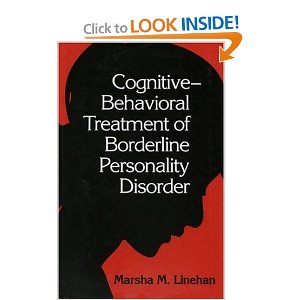
until changes are made. In her textbook, Cognitive-Behavioral Therapy ofBorderline Personality Disorder, Dr. Linehan explains that her rejoicing over
someone’s expressed calamity forces the recipient to stop and take in new
information about how this event will allow the person to practice skills.
Looking back on all the many crises in my life, I see a jar full of lemonade, a
lemonade that I now serve to others who are thirsty for acceptance and change.
The Counseling Group has a team of intensively trained DBT
therapists ready to help those who are eager to find alternative ways to deal
with their suffering and want to create “a life worth living.” I am proud to be
a part of this intensively trained team. For more information about the DBT
program, please visit The Counseling Group’s DBT page or call 305-857-0050.
Monday, July 15, 2013
Koshas, Gunas and the Autonomic Nervous System

As part of my ParaYoga Master® Training,
I recently finished reading the book Yoga& Psychotherapy: The Evolution of Consciousness by Swami Rama, Rudolph
Ballentine, MD, and Swami Ajaya, PhD*. I couldn’t help but bring in my
understanding of the autonomic nervous system, through the lens of StephenPorges’ Polyvagal Theory.**
The book examines concepts of
ancient yoga traditions and modern psychology, and provides insights into the
methods of yoga as therapy. It makes comparisons between yoga philosophy and
Western psychological theories, as well as identifies connections to
neuroscience and the awakening of specific brain centers. Psychology is a
science that is fairly recent.
Only in the last couple of centuries has Western
science questioned man’s “inner being,” mental processes, motivations, and
potential. Yoga, on the other hand, is the oldest continuous discipline and
developed a philosophy of mind and consciousness based on internal
experimentation. In yoga “body” and “mind” are just part of the picture.
According
to yoga philosophy, five “sheaths” or “covers” (known as koshas) obscure the more subtle consciousness that lies within. It
identifies an evolution in the development of human consciousness to universal
consciousness as these sheaths are explored and embodied (or ‘enlivened’) by pure
consciousness. These five levels of being each observe and control the one
below. For example, the physical state is an “embodiment” of a mental state. Although
body, or Annamaya, is the entry point, it is only one dimension of our being. The
five sheaths covering the “Self” or truest essence include: Annamaya (food
sheath); Pranamaya (energy sheath); Manomaya (mental sheath); Vijnanamaya
(intuitive sheath or Buddhi); and finally Anandamaya (blissful sheath).
As a somatic psychotherapist, I
enjoyed reading about the history of body psychotherapy and its relationship to
yoga, which understands more than any other science that posture and body
habits influence mental and emotional states, are intrinsically linked to
personality, and can either help or hinder growth and evolution. In yoga, asana
and mudra can be used to create desired mental (and energetic) states. It is
this “tuning in” to the body that provides the first contact with the inner
realms of experience generally outside the field of our awareness. Although
only the first sheath, it is a critical link to accessing the other four
sheaths and experiencing a true connection of body, mind and spirit.
The second sheath or Pranamaya
relates to the energy body, which is controlled by the flow and alterations or
rhythms of the breath. These rhythms, the authors propose, are intimately tied
to the earliest and most fundamental layers of mental life. In this sense,
breathing is the most efficient intermediary between mind and body. If one can
learn to consistently and deliberately control breath, mental and emotional
states can be shifted. Regulation of breath – union between ida and pingala, the sun and the moon channels -- leads to mastery over
mental and emotional states, which in turn influences body states.
Finally, yoga provides a
comprehensive understanding of mind as having various levels that interact with
one another, and we must be able to observe and not get caught up in manas, or lower mind (consisting of
sensory-motor impressions); chitta,
or the memory bank of all our experiences; asmita
or ahankara, which may be known as
“ego” in the West, and which provides a sense of “I”-ness; and finally Buddhi, which is our capacity for
wisdom, discrimination, and discernment. Beyond these is Atman, or the highest Self.
Patanjali classifies thought forms, or vrittis, in two ways: as obstacles (kleshas) and in terms of function: 1)
accurate perception; 2) inaccurate perception; 3) fantasy or imagination; 4)
memory; and 5) sleep. Through disentanglement from the thought forms, pure
consciousness can begin to emerge. As in Jungian psychology, which seeks to
bring subconscious process and symbolic content to conscious awareness, a vichara process in yoga helps us to
become more intimately aware of these subconscious patterns and tendencies.
Why is all this important? To see
the yoga, or union, between various theories for understanding human
consciousness and behavior helps me to be more helpful to those seeking to grow
and expand mentally, emotionally and/or spiritually, including myself.
The understanding of the various
levels of mind correlate with my understanding of neuroanatomy and the triune brain: The primordial/instinctual/primitive/reptilian brain equaling manas; the limbic system, primarily the
amygdala and hippocampus, equaling chitta;
the sensory-motor cortex, insula, and anterior cingulate cortex equaling asmita/ahankara; and the most evolved
areas of the prefrontal cortex perhaps being the abode of Buddhi (although I believe Buddhi may be non-local).
Additionally, my understanding of
Porges’ Polyvagal Theory also matches up with concepts of yoga, including the gunas (in Samkya philosophy, the
fundamental operating principles of universal nature, , which are Tamas, or inertia; Rajas, or activity; Sattva, or essence). In 1995, Stephen Porges
introduced a new perspective of the autonomic nervous system, identified neural
circuits involved in the regulation of autonomic states, and interpreted
autonomic reactivity as evolutionarily adaptive. He proposed that there are two
vagal motor systems – dorsal vagal (immobility) and ventral vegal (social
engagement) – and that primary
emotions are related to autonomic function (therefore residing in the Annamaya, but responding to the Manomaya). He
re-conceptualized the autonomic nervous system to include target organ,
afferent and efferent nerve pathways, and bidirectional communication between
the heart and the central nervous system (therefore one could imply a
relationship to the seven energy systems in Pranamaya
known as Chakras).
Porges
stated that the autonomic nervous system responds in a highly sequenced
response hierarchy to environmental stimuli, based on a neural process he calls
“neuroception” that evaluates risk and modulates vagal output, triggering or
inhibiting defense strategies for survival. Neuroception, as a process,
determines whether specific features in the environment elicit specific
physiological states that would support either a dorsal vagal immobilization
response (tamas, or inertia), a
sympathetic fight-flight response (rajas,
or action), or a ventral-vagal or social engagement response (sattva, or universal consciousness).
As a dialectical behavior therapist and somatic experiencing practitioner, I teach people to observe
sensations and behavior (Annamaya, and
possibly Pranamaya for those more
sensitive), as well as thoughts and beliefs (Manomaya), in the hope of creating greater awareness, cohesion and
regulation (Anandamaya, or bliss) through
the use of “Wise Mind” (Vijnanamaya or Buddhi).
By having a clearer understanding
of the inter-relationship between the sheaths, and grasping the importance of
combining the right set of practices (or therapies) for each particular
individual, we can maximize the desired effects: whether it is for greater
emotional balance, optimal physical health, clearer mental focus, or reaching enlightenment.
*Swami Rama,
Ballentine, Ajaya (1976). Yoga &
Psychotherapy: The Evolution of Consciousness. Honesdale, PA: Himalayan
Institute Press.
**Porges, S.W.
(2011). The Polyvagal Theory:
Neurophysiological Foundations of Emotions, Attachment, Communication and
Self-Regulation. New York: W.W. Norton.
Monday, January 14, 2013
A Life Worth Living: Embodying Your Dharma Code

For me, pondering these questions has led me on a quest for deeper meaning, and all roads lead to the same place: within. Last week I was in Northampton, Massachusetts at an intensive training in Dialectical Behavior Therapy, a third-wave behavior therapy grounded in a dialectical worldview and mindfulness practices. For several months, I have also been involved in self-reflection and yoga practices in the tradition of Rod Stryker's Para Yoga.
Whether in a professional development training or personal self-realization workshop, the roads are converging for me. This is a nice feeling, because I want to be authentic and transparent, regardless of the setting. I am aware that I am not a typical wine-drinking, Botox injecting, Ferragamo shoe-wearing, hair coloring "Miami girl." I have never injected Botox and I haven't had a drop of alcohol in almost 25 years. I will never pay $500 for a pair of shoes. I am a down-to-earth, Børn-wearing, quinoa-eating, yoga-practicing, cancer-surviving, gray-haired, (hopefully gracefully) aging woman in search for peace and enlightenment.
I was especially excited about the DBT worldview that DBT is therapy between equals. I might know some skills that I teach a client who is the expert in their own experience. I influence them and they influence me. They may engage in therapy-interfering behaviors, and so might I. We are engaged in a graceful dance. Does this approach mean I can bring more of my authentic self into the equation, and let people know that I also need to practice skills to suffer less? I hope so.
Working on Rod Stryker's "Four Desires" exercises, I have identified my Dharma, or life code, as embodying the Divine, expressing Divine ideas, writing and speaking words that inspire and change lives. I am here to heal, myself and others. I do this by attempting to see things with clarity, by nurturing my connection with Spirit daily, by trusting in the abundant love of God (as I understand God), by resting in a benevolent Universe, by releasing all attachments, by having the courage to be transparent. This is a lofty task, given my judgmental, opinionated, and self-righteous nature. But I am up for it.
Can I release self-judgment and become more real? Do I have the courage to walk through fear and reveal who I truly am? I want to. It might be helpful to me, and maybe to others as well.
Sunday, December 16, 2012
Meditation: Tasting the Sweet Nectar
 I learned to meditate when I was 12, from a disciple of the Maharishi Mahesh Yogi. My motives were not pure. I wanted to experience something mystical, anything to take me out of my bodily experience and rocket me into another dimension. Existing in bodily form had never been comfortable, but nearing 13, my body curving and getting denser felt almost excrutiatingly unbearable. He taught me to meditate on the mantra AUM, the sound said in the Yoga Sutras to lead to the ultimate realization of the Self because it represents nothing less than the essence of the Universe, the Source of all Being. All I recall are his large hands doing something resembling a blessing, his mala beads, and the basic instruction to repeat the mantra in my head over and over while seated in a semi-lotus position. Nothing more extraordinary than that.
Without further instruction, I delved in, learning pranayama from books, and experienced the most profound mystical experience of my life -- until earlier this month. Sidetracked by the world of illusion, I forgot the feeling of Oneness, the loss of the "I" identity, the merging with nature I experienced sitting under a guava tree in my backyard when I "saw" God in every leaf, a shining light flowing in the leaf's veins as if breathing, the entire universe present in it, while both the leaf and the universe were also present in me. The sense of bliss (with a capital B) I felt was a nectar I wanted to hold onto, but the "I" voice called back, reminding me that I could not stay out in the garden (of Eden) forever. So I returned inside, to the TV blaring a Mexican telenovela and my abuelita asking me if I wanted a snack.
I did not have a teacher to help me sort out the experience, or to develop a consistent and disciplined practice. The bliss I experienced (call it the pearl of great price, the kingdom of God, or the nectar of devotion) called me, but I did not know how to return to it. After 13 years of digression, I returned to the quest for spiritual enlightenment, searching for (but not finding) a teacher I could follow and respect.
I was never one to fall for men with long beards in white robes who expected admiration. I followed my inner guru, and finally, my inner guru led me to the right teacher(s). And finally, I tasted, once again, the sweet nectar that resides deep in all of our hearts. Hari Om Namo Narayana, Om Namo Narayana. May we never give up on the spiritual quest, and may we always be vigilant and waiting for the teacher to arrive. May we be silent and "hear" the mantra that speaks to our soul.
Tuesday, October 9, 2012
Use Your Pen, Heal Your Pain Workshop
 Mindful Writing to Balance Emotions and
Increase Creativity at The Counseling Group
Mindful Writing to Balance Emotions and
Increase Creativity at The Counseling GroupSaturdays, 2:00 – 3:30 p.m. - once a month
Dates: Starting January 26, 2013
Expressing our deepest thoughts and feelings on paper has been shown by research studies to have deeply beneficial effects on emotional and physical wellbeing. Mindfulness for emotional regulation and stress reduction has an even greater empirical support. Combining both, in the tradition of Natalie Goldberg (author of Writing Down the Bones), provides a safe container for processing painful experiences as well as engendering creativity and intuition. Experience the power of the written and spoken word to heal. The group is facilitated by a psychotherapist, mindfulness practitioner, creative writer and former journalist. Call The Counseling Group at 305-857-0050 to register for this workshop.
Monday, October 8, 2012
Embodying Your Intuition: Creative Self-Care for Professional Helpers in and out of Sessions

Sunday, October 7, 2012
Time to Celebrate Breast Cancer Awareness Month

Friday, September 21, 2012
Raising Awareness About Weight Stigma

Wednesday, June 27, 2012
Alleviating Suffering, One Human Being at a Time
 “I understood that centuries of chains and lashes will not kill the spirit of man nor the sense of truth within him.” --Ayn Rand. This is my experience in working with survivors of torture and ritual abuse. The spark of life, the determination to conquer, the conviction that to fully live is the best revenge, prevail against seemingly unbearable experiences. Last night I was inspired by the story of Mohammed, a refugee from Chad who survived imprisonment and torture for his political views, and of Dr. Miriam Potocky, whose grandparents were killed in Nazi gas chambers. I was honored to receive a Human Spirit Award for my humble contribution in providing pro-bono counseling services to survivors of torture through the Florida Center for Survivors of Torture. The FCST used the event to commemorate the United Nations International Day in Support of Victims of Torture. FCST director Kristen Guscovict reminded the audience that 400,000 survivors of torture live in the United States, which Mohammed described, in his native French language, as "the best country I've evern seen." The evening culminated with a performance of "Death and the Maiden," a play by Chilean playwright Ariel Dorfman which depicts the aftereffects of political torture and asks critical questions about what justice means. I leave you with Dr. Potocky's formula to help alleviate suffering and eradicate inhumanity: a) Advocate; b) Befriend a survivor, show kindness to help someone heal from the experience of man's inhumanity to man; c) Ask critical questions and don't turn a blind eye. And for that, I am responsible...
Subscribe to:
Posts (Atom)